

A rash is a visible reaction on the skin. There can be various factors that contribute to a rash. Some of the causes can include an allergy, medications, infection, or virus. A rash is your skin’s way of letting you know that something is irritating it.
Most rashes that children develop are harmless in nature and will resolve on their own without treatment. There are, however, some rashes that can be potentially dangerous.
Understanding Dangerous Rashes
Currently, there are 5 major life-threatening disorders that display a skin rash as their major symptom. These include Toxic Epidermal Necrolysis (TEN), Pemphigus Vulgaris (PV), Toxic Shock Syndrome (TSS), Stevens-Johnson syndrome (SJS) and staphylococcal scalded skin syndrome (SSS). It’s important to know that these disorders are extremely rare but important to be informed about. If at any time your child experiences a full body rash, a rash of the mucous membranes, or a rash with blistering, seek medical attention immediately.*
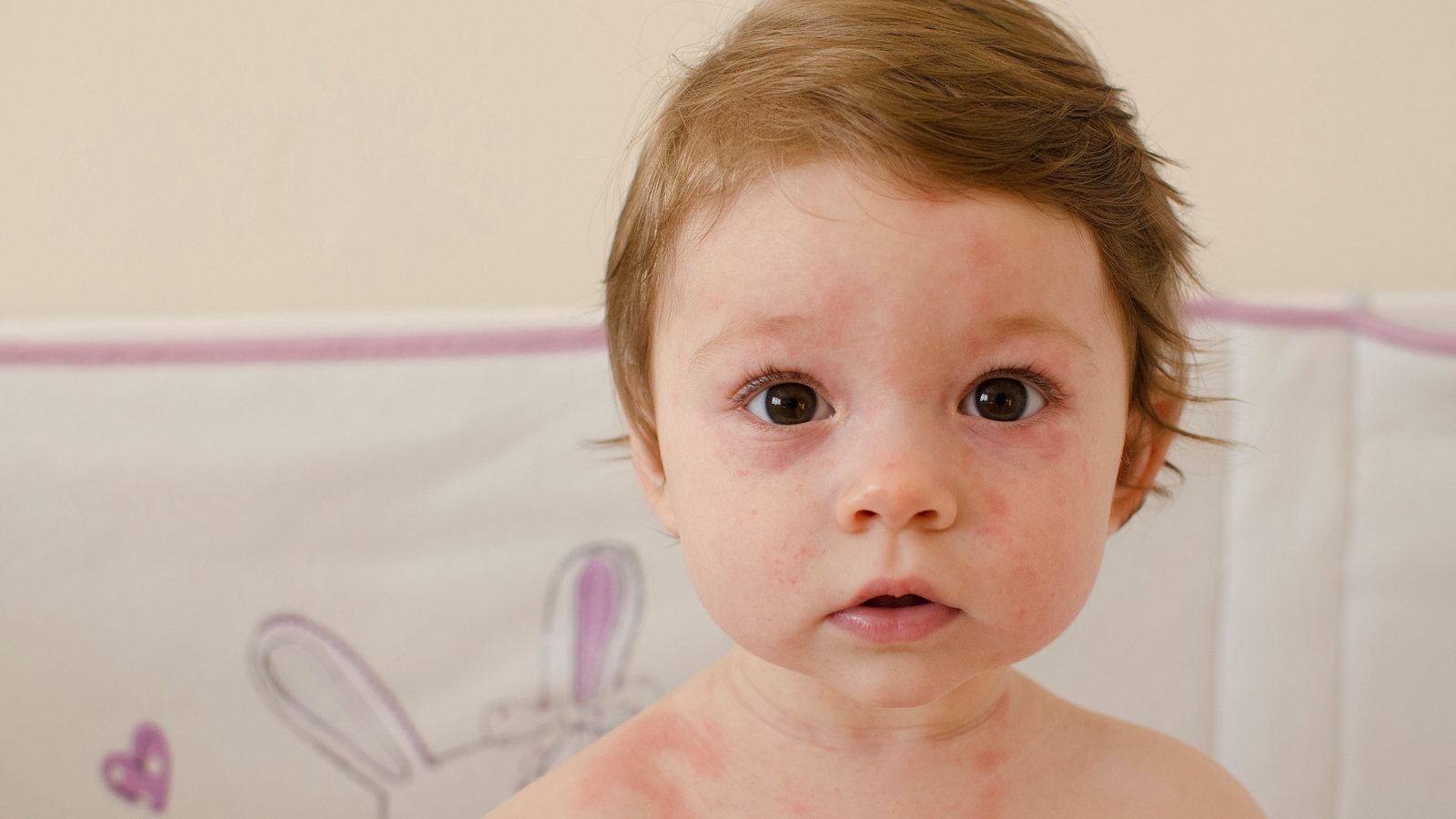
Many parents choose to have their children vaccinated to help prevent several different diseases that cause rashes. Others choose not to, whether for religious, medical, or personal beliefs.
Chicken Pox, or varicella-zoster, causes a very itchy rash that starts in one area of the body and spreads in waves over the entire body. Chicken pox is not classified as a serious disease, but it is very contagious and makes the child very uncomfortable for several weeks.
Measles and Rubella are also caused by a virus. Measles can make your child quite ill for several days but should not cause permanent damage. When a child develops the measles, there is no treatment but to wait until it gets better. Rubella, on the other hand, does not make your child become ill. Rubella causes soreness in the neck from enlarged lymph nodes. Both measles and rubella can be prevented usually with the MMR (measles, mumps and rubella) vaccine that is generally administered to children around the age of one and then repeated before the child enters kindergarten.
Scarlet fever is a rash that occurs when a child develops strep throat. If the strep throat is treated, neither the rash nor the strep throat is a concern. Left untreated, the risk for rheumatic fever is possible. Rheumatic fever causes permanent damage to the heart, and the effects last a lifetime.
The Human Herpes Virus 6 is responsible for Roseola. Roseola starts in the torso and spreads to the arms and legs. This small pink rash appears several days after a high fever.
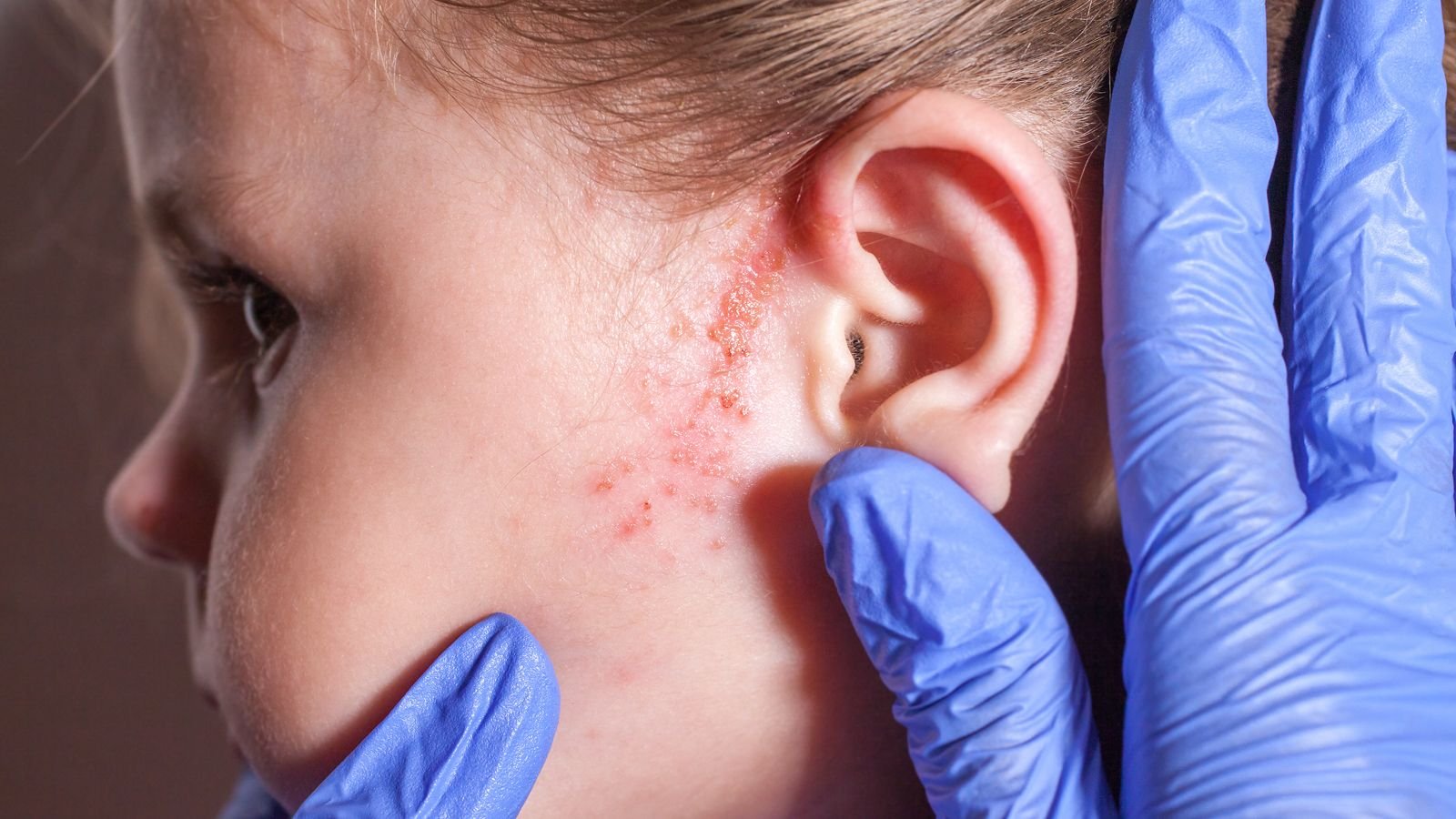
Impetigo is a rash that is caused by staphylococcal bacteria. This itchy rash can appear anywhere on the body. It is diagnosed by itchy blisters that rupture and form yellow oozy scabs. Impetigo is highly contagious and is treated with antibiotics.
Other Rashes
As earlier mentioned, a rash can be caused by other irritants. Infants may develop diaper rash from irritation from stool, urine, and baby wipes. Children and adults can even develop rashes from the use of different detergents and fabric softeners. Cleaners can be irritating to the skin and also form a rash.
When a child is allergic to a medication, one of the first symptoms of the allergy is a skin rash. Antibiotics are common drugs that cause a rash. Food, dyes, insect bites, and metals are also known to causes rashes in children and adults.
Stress or extreme worry can also cause a rash or “hives.”
Sometimes rashes happen for no reason at all.
While most rashes clear up on their own, parents want to do whatever they can to help make their child more comfortable.
- Parents should encourage their child not to scratch the areas. Keep children’s fingernails clean and short.
- Dress your child in cotton clothing to help the skin breathe.
- Oatmeal baths, such as the oatmeal bath by Aveeno, may decrease the itching.
- A topical cream, such as Hydrocortisone, can be applied to the skin to also decrease the urge to scratch, and it will help keep the skin moist.
- Oral antihistamines like Benadryl can also be used. It is important to understand that Benadryl comes in the oral form and the topical cream. You should never use both at the same time unless directed by the child’s doctor. It is important to also follow directions carefully when giving young children Benadryl.
- Over the counter fever reducers such as Tylenol or Motrin can also be given to help relieve fever or body aches.
If your child’s symptoms become worse, the rash does not respond to home treatment, other symptoms emerge, or if you have any doubt, contact your child’s physician.
© Rebecca Pillar 2007